
How Many Ultherapy Shots Do You Actually Need?How Many Ultherapy Shots Do You Actually Need? A Shot Count Guide by Area
Updated: Sep 16
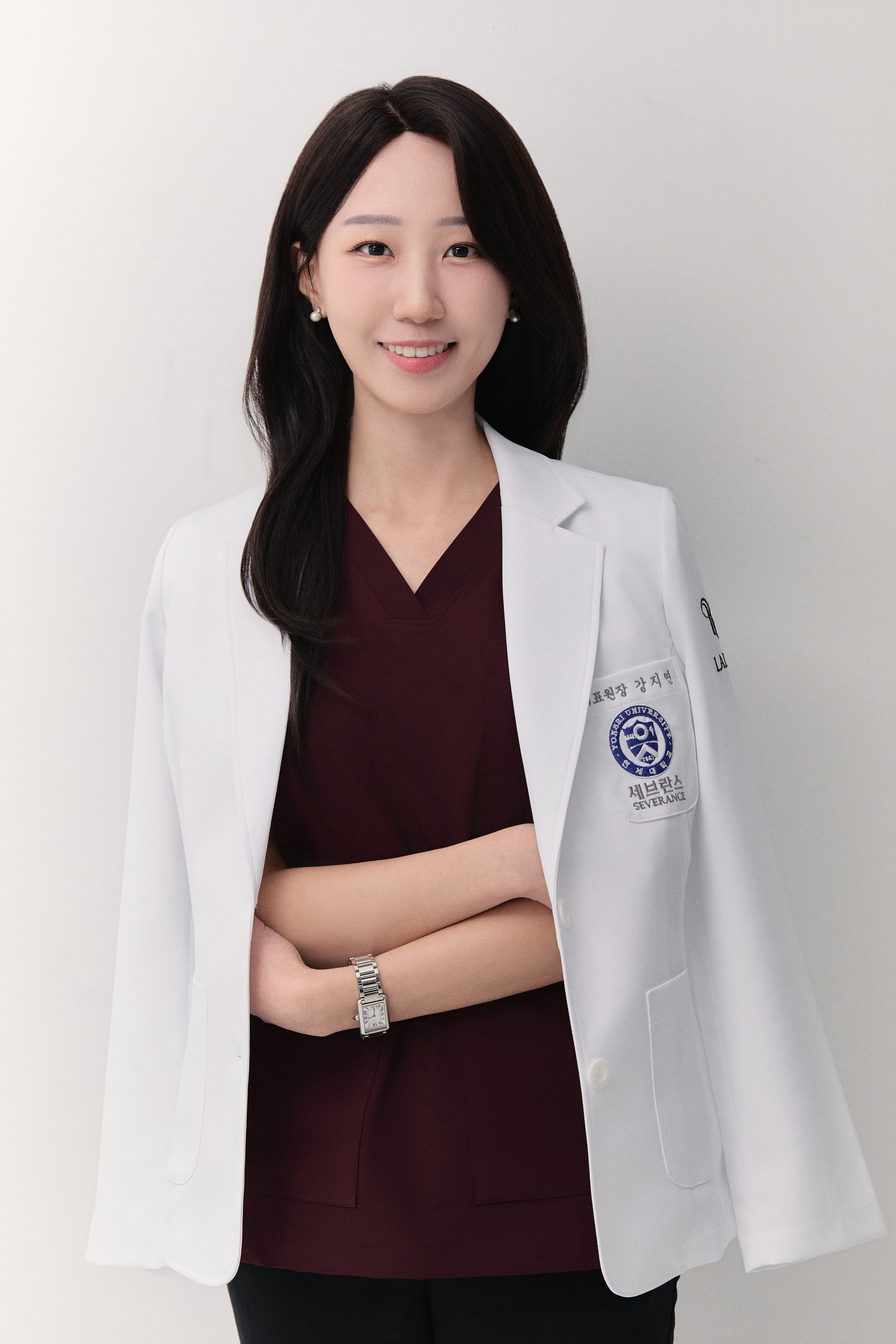
✓ Medically reviewed by Dr. Jiyoun Kang · Last updated: September 11, 2026 · Reading time: 8 min

Almost every Ultherapy quote in South Korea is written in shots, and almost no clinic explains what a shot buys you. International patients arriving in Seoul — most of them at clinics in Gangnam District, many within a few streets of Cheongdam and Apgujeong Rodeo Station — end up comparing a 300-shot quote against a 600-shot quote with no way to judge which one matches their face.
This guide explains what a shot is, roughly how many each facial area requires, and the five variables that make two identical shot counts produce very different results. No prices appear here, because price is downstream of these decisions rather than upstream of them.
Quick Answer: One Ultherapy shot is a single line of focused ultrasound energy delivered at a set depth. Lower face and jawline typically needs a few hundred shots, while full face with neck needs substantially more. The correct number is determined by treatment area, tissue depth, and facial structure — not by a package tier. Individual results may vary.
What Is a Shot in Ultherapy, Exactly?
A shot — also called a line — is one discrete delivery of microfocused ultrasound energy into a fixed tissue depth.
The handpiece does not sweep continuously across the skin. It places energy in individual lines, each one creating a small zone of focal coagulation that the body then repairs by laying down new collagen. The number of lines is therefore a direct measure of how much tissue is being treated and how densely.
Depth matters as much as count. A 4.5 mm line reaches the SMAS layer, a 3.0 mm line targets the deep dermis, and a 1.5 mm line works superficially. A treatment plan is not one number — it is a distribution of lines across depths, which is why "how many shots" and "how many shots where" are different questions.
The Seoul National University Hospital trial on neck lifting offers a useful published reference point: it evaluated Ultherapy on neck skin using 200 to 260 lines of 3.0 and 4.5 mm probes. That is one anatomical region, in a controlled protocol.
Want to know what your face actually needs before you compare quotes? Book a private consultation with Dr. Jiyoun Kang →
How Many Shots Does Each Facial Area Need?
Shot requirements scale with surface area and with how many depths that area needs, so the same number covers very different amounts of face depending on where it goes.
The ranges below reflect typical planning at Lalian and are a starting frame for a consultation, not a quote. Facial size, bone structure, fat distribution, and skin thickness all shift them.
Treatment area | Typical line range | Primary depths used |
Brow / forehead | 30–60 | 1.5 mm, 3.0 mm |
Mid-face / cheeks | 80–150 | 3.0 mm, 4.5 mm |
Jawline / lower face | 100–200 | 3.0 mm, 4.5 mm |
Submental (under chin) | 40–80 | 3.0 mm, 4.5 mm |
Neck | 100–200 | 1.5 mm, 3.0 mm |
Full face | 300–400 | All three depths |
Full face + neck | 500–700 | All three depths |
Reading this table sideways is the useful exercise. A 300-shot quote that covers the full face is spread thin across every zone; a 300-shot quote concentrated on the jawline and submental area is dense treatment of a small region. Both are legitimate plans for different faces.
Are More Shots Always Better?
More shots are not automatically better, and beyond a certain density the additional energy stops improving the result.
Ultherapy works by triggering a healing response, and that response has a ceiling. Once a zone has received enough lines to provoke collagen remodeling, adding more delivers diminishing benefit while increasing discomfort and, in thin or low-volume faces, the risk of treating tissue that should have been left alone.
The measured outcomes in the literature come from controlled protocols rather than maximum-density ones. A microfocused ultrasound study of the lower face reported an average lift of 1.7 mm at ninety days with 75 percent subject satisfaction — a real but modest change, produced by a standard protocol rather than an inflated one.
If a quote is unusually high in shot count for the area being treated, the question to ask is which zones the extra lines are going to and at what depth. Individual results may vary.
What Makes the Same Shot Count Cost Differently?
Two clinics can quote the identical number of shots and be selling meaningfully different treatments, because shot count is only one of five variables.
Device generation. Ultherapy Prime and the earlier platform both deliver lines, but imaging resolution and transducer configuration differ. Both may be advertised simply as "Ultherapy."
Transducer cartridge condition. Each cartridge has a finite number of lines. Whether a new cartridge is opened for your session is a question you are entitled to ask.
Who holds the handpiece. Line placement is a clinical judgment about depth and vector. Whether that judgment is made by the physician who assessed you, or delegated afterwards, changes the outcome more than the count does.
Depth distribution. A plan weighted toward 4.5 mm lines over the SMAS is not equivalent to the same count delivered superficially, even though the receipt reads the same.
What follow-up is included. Some plans include a review appointment or remote follow-up after you return home; some end at the door.
Our complete guide to Ultherapy in Korea covers how these variables fit into the wider decision, and our article on confirming authentic Ultherapy covers the cartridge and device checks specifically.
How Should You Read a Shot-Based Quote?
A shot-based quote becomes readable once you ask for it broken down by zone rather than given as a single number.
Ask which areas are included, how many lines go to each, and which depths are being used where. A clinic that has actually planned your treatment can answer this in a sentence. A clinic that has selected a package tier usually cannot.
It is also reasonable to ask that the number be confirmed during the session. The device displays a remaining-lines counter, so what was quoted and what was delivered are verifiable in real time.
Who Needs Fewer Shots Than They Expect?
Several groups are commonly quoted more lines than their face benefits from, and recognizing yourself here is worth doing before you book.
Good candidates for a lower shot count:
You are in your early thirties with minimal existing laxity and your goal is maintaining definition rather than correcting sagging.
Your concern is limited to one zone — jawline softening alone, or submental fullness alone — rather than generalized change.
You have low facial fat volume or have lost weight recently, where conservative depth and density is the safer plan.
Higher counts are usually appropriate for:
Full-face treatment with neck in a single session, where the surface area genuinely requires it.
Moderate laxity across multiple zones in the mid-to-late forties and beyond.
If low facial volume is your situation, our article on whether Ultherapy causes facial hollowing explains why shot count and depth selection matter more for you than for most patients.
What Results Can You Expect From a Correctly Planned Session?
A well-distributed session produces gradual firming that builds over months rather than a visible change on the day.
Initial tightening is often noticed at two to four weeks, the visible result develops across three to six months, and it typically holds for twelve to eighteen months. Shot count influences how much tissue is recruited into that process, but it does not shorten the timeline.
Factor | Detail |
Mechanism | Microfocused ultrasound with visualization (MFU-V) |
Depth of action | 1.5 mm, 3.0 mm, 4.5 mm (SMAS) |
Typical full-face range | 300–400 lines |
Typical full face + neck | 500–700 lines |
Results appear | Gradually over 3–6 months |
Longevity | Typically 12–18 months |
Individual results may vary.
The Lalian Approach
Shot distribution at Lalian Cheongdam Clinic is designed by Dr. Jiyoun Kang during the consultation, under the clinic's 1:1 Single Responsibility System.
That means the person who assesses your facial structure, fat distribution, and skin thickness is the person who decides where the lines go and who delivers them. Lalian does not sell Ultherapy as a fixed package tier, because the count that matters is the count matched to your anatomy.
Consultations are conducted directly with Dr. Kang, with multilingual coordinators available in English, Chinese, and Japanese. If your assessment suggests fewer lines than you expected, you will be told that.
Frequently Asked Questions
How many Ultherapy shots do I need for the jawline?
Jawline and lower face typically falls in the range of 100 to 200 lines, mostly at 3.0 mm and 4.5 mm. The exact number depends on jaw width, skin thickness, and how much submental area is included. It should be quoted by zone rather than as a single figure.
Is 300 shots enough for a full face?
It can be, but 300 lines spread across a full face is a lighter treatment than 300 lines concentrated on one region. Full face commonly sits in the 300 to 400 range. What matters is whether the distribution matches where your laxity actually is.
Can I ask the clinic to show me the shot count during treatment?
Yes. The device displays a remaining-lines counter on screen, so the number delivered can be confirmed as the session proceeds. This is a normal request.
Do more shots mean longer-lasting results?
Not proportionally. Once a zone receives enough energy to trigger collagen remodeling, additional lines add discomfort more reliably than they add longevity. Duration is driven more by your baseline collagen and age than by density.
Why do clinics quote such different shot numbers for the same treatment?
Because "the same treatment" usually is not. Differences in included zones, depth distribution, device generation, and who performs the procedure all sit behind the number. Asking for a zone-by-zone breakdown makes the comparison meaningful.
Ready to Book
If you are holding two quotes with different shot counts and cannot tell which one fits your face, that is exactly what a consultation is for.
About Dr. Jiyoun Kang: Dr. Jiyoun Kang is the Representative Director of Lalian Cheongdam Clinic and a Family Medicine specialist trained at Sinchon Severance Hospital, Yonsei University Health System. She serves as Clinical Professor at Yongin Severance Hospital (Yonsei University Health System) and Preliminary Director of the Korea Academy of Obesity & Aesthetic Treatment. All consultations and treatments at Lalian follow a 1:1 Single Responsibility System — Dr. Kang personally manages every stage from anatomical analysis to the final procedure. More about Dr. Kang →
📍 2F, Dosan-daero 59-gil, 9, Gangnam District, Seoul, South Korea (Cheongdam)
📞 +82-2-517-3335
📸 Instagram: https://www.instagram.com/lalianclinic.global/
💬 WhatsApp: https://api.whatsapp.com/send/ phone=8225173335&text&type=phone_number&app_absent=0
📱 Line (Global): https://line.me/R/ti/p/@066escta
📱 Line (Taiwan): https://lin.ee/xcFKUfp
🌐 Website: https://www.lalian-clinic.com/
International visitors welcome. English, Chinese, and Japanese consultation supported.
Medical Disclaimer: All procedures described are medical treatments. Individual results may vary based on skin type and condition. A private consultation with Dr. Jiyoun Kang is required to determine the most suitable protocol for your unique needs. All information provided is for educational purposes and does not replace professional medical advice.


Comments