
Will Ultherapy Make My Face Look Hollow?Will Ultherapy Make My Face Look Hollow? The Honest Answer
Updated: Sep 16
✓ Medically reviewed by Dr. Jiyoun Kang · Last updated: September 11, 2026 · Reading time: 8 min

This is the concern that stops more people from booking Ultherapy than pain or price, and it is usually raised in patient communities rather than in clinics. Most clinic pages in Seoul, Gangnam District included, answer it with a single reassuring sentence and move on.
It deserves better than that, because the concern is not baseless — it is conditional. Below is what is actually known, who genuinely should be cautious, and how the risk is managed at Lalian Cheongdam Clinic in Cheongdam, near Apgujeong Rodeo Station in Seoul, South Korea.
Quick Answer: Honest answer: Ultherapy is worth it for people with mild to moderate laxity and adequate facial volume, but not for people with low facial fat, recent significant weight loss, or existing mid-face hollowing. Results last twelve to eighteen months and require periodic maintenance. The biggest honest limitation is that energy delivered too deeply in a thin face can affect volume rather than lift it. Individual results may vary.
The Case Against Ultherapy — Real Limitations You Should Know
The honest limitations of this treatment are specific rather than general, and three of them matter more than the rest.
Energy delivered at the wrong depth in a low-volume face can reduce facial fullness rather than lift it.
Ultherapy's deepest setting targets the SMAS layer. In a face with generous subcutaneous fat, the fat compartments sit as a buffer between the skin and that layer. In a thin face, or one where the mid-face fat pads have already descended and thinned, the margin is smaller. This is the anatomical basis of the concern, and it is why depth selection and candidate screening are not administrative steps.
Ultherapy cannot correct volume loss, and treating a volume problem as a laxity problem makes the face look more drawn, not less.
Many people who feel their face is "sagging" in their forties are seeing a combination of laxity and lost volume. Tightening skin over a smaller underlying structure does not restore the earlier shape. If the primary change is hollowing under the eyes or flattening through the cheeks, a lifting device is the wrong first tool regardless of how well it is performed.
It underdelivers on advanced sagging, and a clinic willing to sell it to you anyway is the real risk.
Ultherapy produces measured, modest change — a study of the lower face found an average lift of 1.7 mm at ninety days. That is a meaningful result for early laxity and an inadequate one for heavy jowling. Where surgery is the appropriate answer, an energy device sold as a substitute costs you money and a year.
Not sure whether your concern is laxity or volume? Request a personalized treatment plan →
The Case For Ultherapy — Why Most Patients Don't Regret It
For the patients it actually suits, Ultherapy remains one of the more predictable non-surgical options available, and the reasons are documented rather than promotional.
Its mechanism is well characterized. Histological work on Asian skin has shown focal coagulation at 60 to 70 degrees in the deep dermis and SMAS layer, with collagen remodeling visible at sixty days. A rater-blinded prospective study found that at ninety days, 86 percent of subjects showed a clinically significant brow lift.
It is also melanin-independent, which matters for a large share of international patients. A 2023 study found microfocused ultrasound safe and effective across Fitzpatrick skin types III to VI with no incidence of pigmentary adverse events. Our guide to PIH-safe lifting for deeper skin tones covers this in detail.
And it leaves no visible recovery, which is why it survives a compressed travel schedule that most alternatives do not.
Who Should Think Twice Before Booking?
Certain profiles carry a genuinely higher risk of an unsatisfying volume outcome, and recognizing yourself in this list is a reason to raise it explicitly in consultation.
Think twice if:
You have low body fat generally, or have been told your face is naturally thin.
You have lost a significant amount of weight recently, including on GLP-1 receptor agonist medication, and your face has changed as a result.
You already notice hollowing under the eyes, flattening through the mid-cheek, or temple recession.
Your goal is described in your own words as "restoring fullness" rather than "tightening."
Ultherapy is likely a reasonable fit if:
Your concern is a softening jawline or early submental laxity with your facial volume otherwise unchanged.
You are maintaining rather than correcting, and want to slow the rate of change.
You have adequate subcutaneous fat and good skin quality in the treatment zones.
If you fall into the first group, the conversation should start with volume. Biostimulators and volume-restoring approaches address a different problem, and our article on non-surgical options for a sagging jawline in your forties explains how the two categories work together.
The Variables That Determine Your Result
Outcome variance in Ultherapy is driven by a short list of factors, and only one of them is the device.
Baseline collagen and age set the ceiling on how much remodeling is available. Facial fat distribution determines which depths are safe and useful in which zones. Skin thickness affects energy transmission. And line placement — where each shot goes and at what depth — is the operator's judgment, which is why the same device produces different results in different hands.
Aftercare matters least of these, which is worth saying plainly. There is no post-treatment regimen that rescues a plan that was wrong at the depth-selection stage.
If you are earlier in the decision than this article assumes, our complete guide to Ultherapy in Korea covers candidacy, shot counts, and device checks in one place.
What "Worth It" Actually Means Here
Setting a realistic definition of success before treatment is the single best protection against disappointment afterwards.
Success looks like: a gradual firming along the jawline and under the chin that becomes noticeable to you between two and four months, is visible in photographs taken from the same angle, and holds for roughly a year to eighteen months before you consider maintenance. It does not look like a changed face, and it does not look like a surgical result.
One more expectation worth setting now: around five to six weeks after treatment, many people feel the early tightening has faded. This reflects the initial tissue response settling before collagen synthesis takes over, and it is not a sign of failure. Individual results may vary.
How Lalian Approaches This Honestly
At Lalian Cheongdam Clinic, candidacy for Ultherapy is assessed on facial volume before it is assessed on laxity, which occasionally means recommending against the treatment.
Under the 1:1 Single Responsibility System, Dr. Jiyoun Kang conducts the anatomical assessment, designs the shot distribution, and performs the procedure. Where fat volume is limited, the plan is adjusted — fewer lines at the deepest setting, redistribution toward zones that tolerate it, or a recommendation that volume be addressed first.
There is also a request worth making in any consultation, at any clinic: ask the physician to confirm that the plan is for lifting rather than fat reduction, and to say which depths are being used where. A clinic that has planned your treatment can answer that immediately.
Consultations are conducted directly with Dr. Kang, with multilingual coordinators available in English, Chinese, and Japanese.
Frequently Asked Questions
Can Ultherapy cause facial fat loss?
Volume change is a recognized concern in patients with limited facial fat, and it relates to energy delivered at depth in a face without much subcutaneous buffer. It is managed through candidate screening and depth selection rather than avoided by luck. This is why the consultation should assess volume, not only laxity.
Is Ultherapy safe if I've lost a lot of weight recently?
It requires more caution. Rapid weight loss changes facial fat distribution, and a face that has thinned recently may need volume restored before lifting is appropriate. Raise the weight change explicitly in your consultation rather than assuming it will be noticed.
What if I don't see results?
Some patients see less change than hoped, most often when baseline laxity was more advanced than the treatment can address, or when the shot distribution did not match where the laxity actually was. A follow-up review should establish which. Ultherapy is not reversible, but it is also not permanent — the effect fades over twelve to eighteen months.
Is Ultherapy safe in Korea?
The device and its clearances are the same internationally; what varies between clinics is the generation of the platform, whether a new transducer cartridge is used, and who performs the treatment. Those are verifiable, and our guide on confirming authentic Ultherapy walks through the checks.
Should I get fillers or Ultherapy first?
If volume loss is the dominant change, volume is usually addressed first, with lifting considered afterwards. Sequencing depends on your specific anatomy and should be planned in a single consultation rather than across two clinics.
Ready to Book?
If this article has made you less certain rather than more, that is a reasonable place to be — and a consultation is where that gets resolved rather than reinforced.
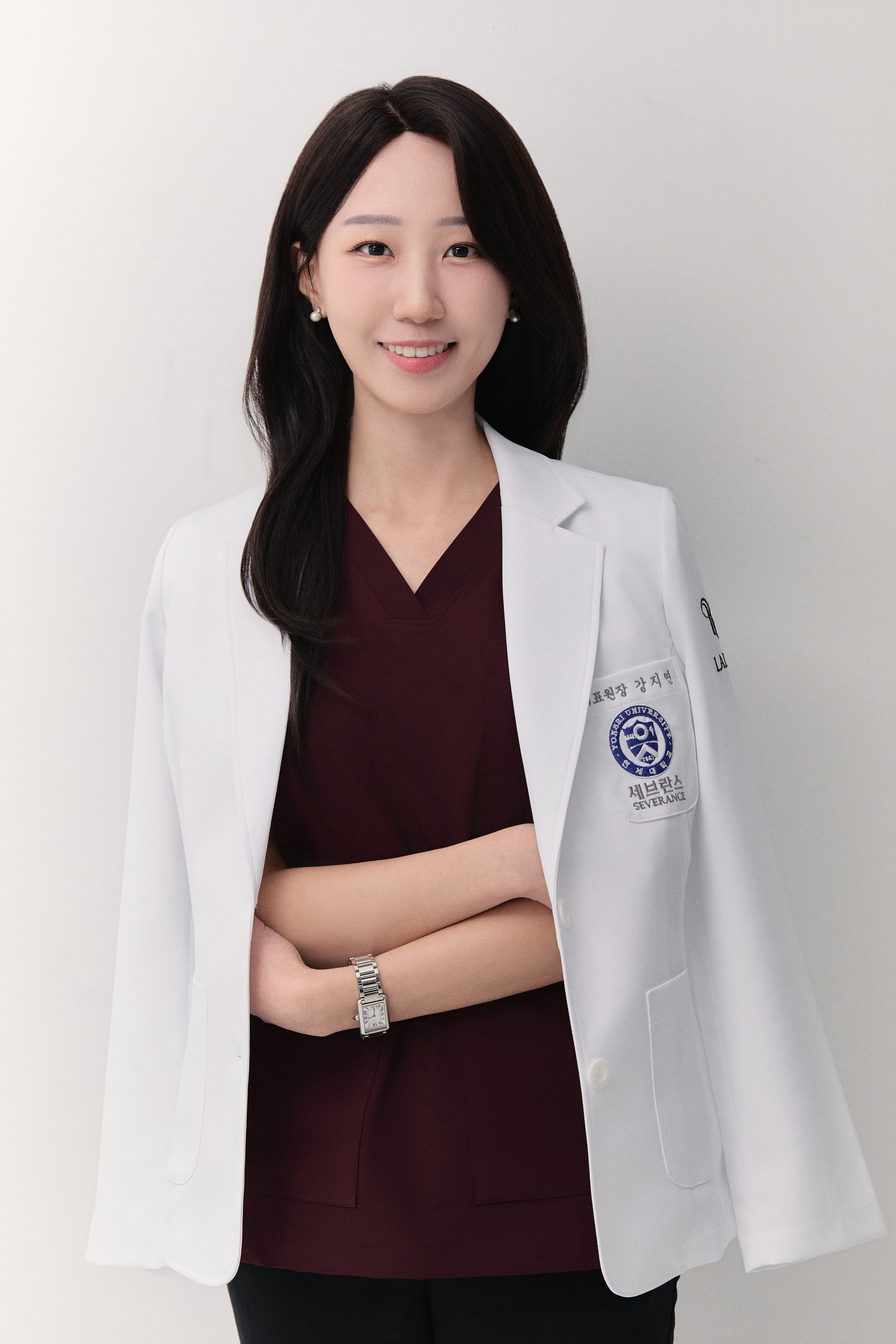
About Dr. Jiyoun Kang: Dr. Jiyoun Kang is the Representative Director of Lalian Cheongdam Clinic and a Family Medicine specialist trained at Sinchon Severance Hospital, Yonsei University Health System. She serves as Clinical Professor at Yongin Severance Hospital (Yonsei University Health System) and Preliminary Director of the Korea Academy of Obesity & Aesthetic Treatment. All consultations and treatments at Lalian follow a 1:1 Single Responsibility System — Dr. Kang personally manages every stage from anatomical analysis to the final procedure. More about Dr. Kang →
📍 2F, Dosan-daero 59-gil, 9, Gangnam District, Seoul, South Korea (Cheongdam)
📞 +82-2-517-3335
📸 Instagram: https://www.instagram.com/lalianclinic.global/
📱 Line (Global): https://line.me/R/ti/p/@066escta
📱 Line (Taiwan): https://lin.ee/xcFKUfp
🌐 Website: https://www.lalian-clinic.com/
International visitors welcome. English, Chinese, and Japanese consultation supported.
Medical Disclaimer: All procedures described are medical treatments. Individual results may vary based on skin type and condition. A private consultation with Dr. Jiyoun Kang is required to determine the most suitable protocol for your unique needs. All information provided is for educational purposes and does not replace professional medical advice.


Comments