
Sagging Jawline in Your 40s: Non-Surgical Treatment Options at Lalian Cheongdam Clinic in Seoul
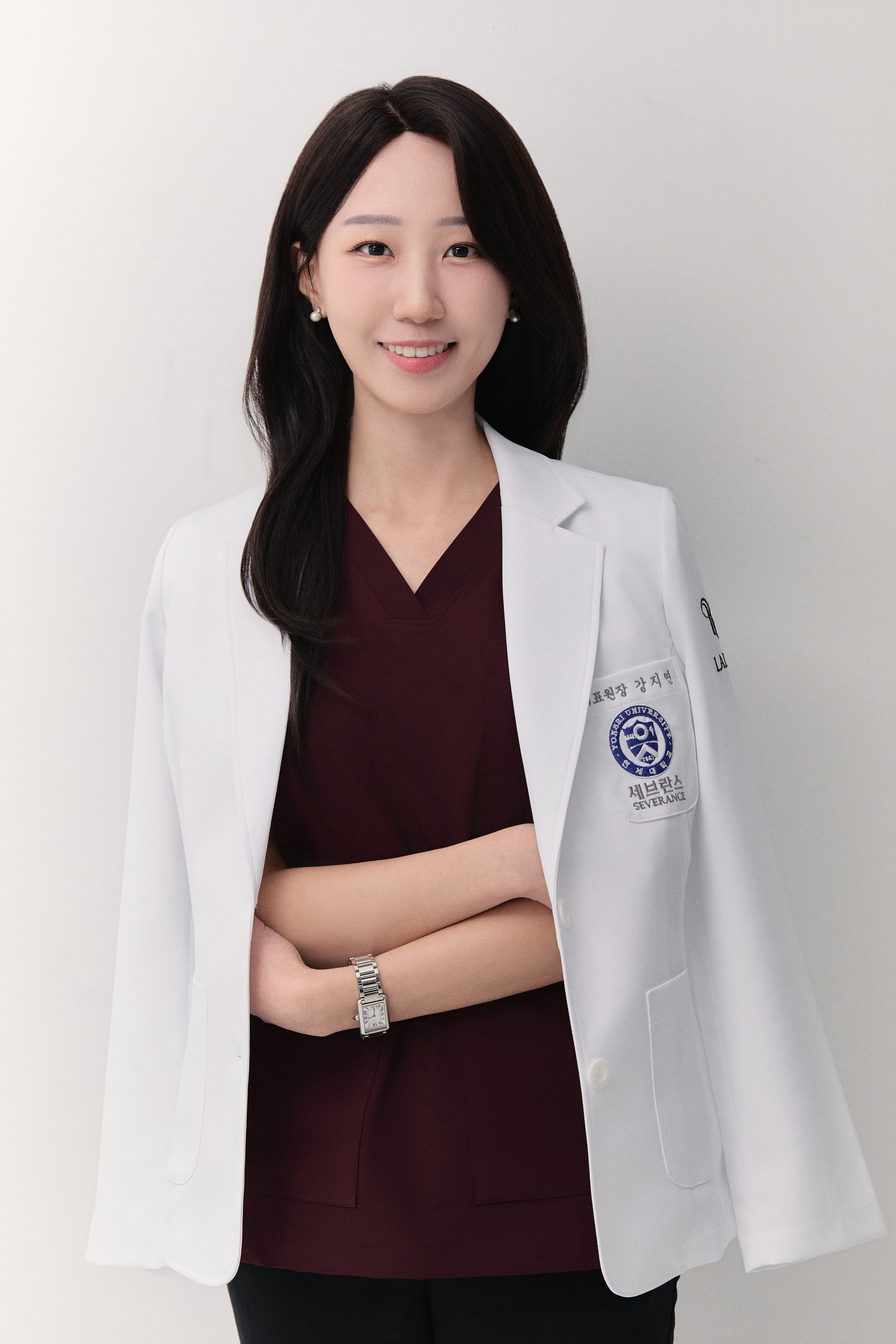

The jawline is often the first feature to lose its definition in your 40s — and at Lalian Cheongdam Clinic, a private aesthetic practice in the Cheongdam neighborhood of Seoul's Gangnam District, South Korea, it is also one of the most common concerns we hear from international patients flying into Korea for skin treatment. Dr. Jiyoun Kang, a Family Medicine specialist trained at Sinchon Severance Hospital (Yonsei University Health System), sees jawline sagging not as a single problem but as the result of three layered changes — collagen loss, fat redistribution, and skin laxity — each of which responds to a different treatment.
✓ Medically reviewed by Dr. Jiyoun Kang · Last updated: May 20, 2026 · Reading time: 6 min
Quick Answer: The problem: A sagging jawline in your 40s is rarely a single issue — it usually combines collagen loss, downward fat displacement, and skin laxity along the SMAS layer. The solution: A non-surgical plan typically combines an energy-based lift (Ultherapy Prime or Thermage FLX), a collagen biostimulator (Sculptra or Radiesse), and — where the masseter is prominent — a jawline slimming injection. Most patients see meaningful change after a structured 1–2 visit protocol, with effects continuing to build over 3–6 months.
Why a Jawline Begins to Sag in Your 40s
The 40s mark the decade when three independent aging processes begin to overlap visibly along the lower face
Collagen production declines roughly 1% per year after age 30, and by the early 40s the dermis has lost a measurable portion of its structural support. Adipose compartments in the cheek and jaw begin to descend, while the SMAS layer — the connective fascia that holds facial muscles in place — loses tension. In Asian skin specifically, the masseter muscle can also remain prominent, contributing to a heavier-looking lower face rather than a sharper jawline.
The result is not one type of sagging but several at once: a softened mandibular border, the appearance of jowls in front of the chin, and sometimes a heavier neck contour. Effective treatment depends on which of these is dominant in your specific case — which is why a Lalian protocol always begins with a layered anatomical analysis rather than a fixed package.
What Treatments Address Jawline Sagging — and How
Lalian offers four categories of non-surgical treatment for jawline laxity, each addressing a different anatomical layer. Dr. Kang selects from these based on the 3D anatomical analysis performed during the consultation, not on a fixed menu.
Ultherapy Prime — for SMAS Lifting
Ultherapy Prime uses microfocused ultrasound (MFU-V) to deliver focal coagulation points at the SMAS depth — the same connective layer a surgeon would tighten during a facelift. A prospective rater-blinded cohort study published in the Journal of the American Academy of Dermatology found that 86% of subjects showed clinically significant lifting on blinded photographic review 90 days post-treatment. For patients whose primary concern is structural descent rather than skin texture, this is typically the foundation of the protocol. More on this treatment in the Ultherapy Prime guide at Lalian.
Thermage FLX — for Skin Tightening
Thermage FLX uses monopolar radiofrequency to heat the dermis and stimulate collagen contraction, addressing skin laxity more than deep structural lift. It works particularly well when the skin envelope itself looks loose even though the underlying structure is still relatively intact. In a multicenter study of monopolar radiofrequency, 87% of patients showed measurable tightening, with the full effect building over 4–6 months. For a side-by-side framework, see the Thermage FLX complete guide.
Sculptra or Radiesse — for Collagen Volume Restoration
When jawline laxity is driven by volume loss rather than skin descent, a collagen biostimulator is often the better starting point. Sculptra (poly-L-lactic acid) and Radiesse (calcium hydroxylapatite) both stimulate your own collagen production rather than acting as a passive filler — the result builds gradually over 3–6 months. Histologic evidence of new collagen formation at 6 months post-Sculptra was established in a single-arm tissue-response study, and Galderma's manufacturer-reported data shows 86% of patients with improved jawline contour at two years post-treatment. For the full comparison, see the Sculptra vs Radiesse vs Juvelook guide at Lalian. Individual results may vary.
Anti-Wrinkle and Jawline Slimming Injection — for a Prominent Masseter
When the lower face looks heavier rather than saggier, the masseter muscle is often the underlying cause. A jawline slimming injection — using a precise dose of botulinum toxin delivered into the masseter — relaxes the muscle and gradually slims the contour over 4–8 weeks. The same family of muscle-relaxing injections can also soften platysmal bands, which contribute to the "neck pull-down" that often accompanies jawline change in the 40s. This is typically used as a complement to lifting rather than as a standalone solution.
What Results Can You Realistically Expect?
Jawline laxity in the 40s rarely responds to a single device — but every case has a primary driver, and the depth of treatment should match the severity.
Mild case: Early softening of the mandibular border, no visible jowl, intact skin tone. Most patients respond well to a single Ultherapy Prime session, sometimes paired with a jawline slimming injection if the masseter is contributing. Expect a refined contour visible at 90 days, with continued improvement to 6 months.
Moderate case: Visible early jowl, mild collagen loss along the cheek and jaw, intact but softening skin. The typical protocol combines Ultherapy Prime for SMAS lift with a structured Sculptra series (2 sessions, 6 weeks apart) for biostimulation. Lalian's sequencing follows the framework studied in an industry-sponsored randomized trial of Sculptra biostimulation followed by Ultherapy lifting four months later (ClinicalTrials.gov NCT01422538).
Severe case: Pronounced jowls, significant volume loss, lax skin envelope, sometimes neck involvement. A non-surgical approach can still meaningfully improve appearance, but expectations must be calibrated honestly — the result will not match a surgical facelift, and a combination of three modalities is usually needed across 2–3 visits.
The Lalian Approach: Consultation Before Treatment
At Lalian, every protocol is built around the 1:1 Single Responsibility System — Dr. Jiyoun Kang personally manages every stage of your care, from the initial anatomical analysis to the final injection or energy pass. There are no rotating providers and no "treatment menu" recommendations.
The consultation begins with a layered analysis of the skin, fat compartments, and SMAS layer — the three structures aging acts on independently. From there, Dr. Kang designs a protocol that targets the dominant driver of your specific jawline change, rather than applying a one-size-fits-all package. International patients are seen with English consultation directly from Dr. Kang, with no translator gap during the diagnostic phase.
When Is Non-Surgical Treatment Not the Right Answer?
Honesty matters here. A non-surgical jawline plan works best for patients whose laxity is still in the mild-to-moderate range, who have reasonably stable skin quality, and who are willing to wait 3–6 months for full results to build.
For patients with significant skin redundancy, deep neck banding, or severe volume loss combined with poor skin elasticity, a non-surgical approach may produce only a partial result — and a surgical consultation may be the more honest recommendation. Lalian will tell you this directly during consultation rather than proceeding with a treatment unlikely to meet your expectations.
Frequently Asked Questions
How long do results from a non-surgical jawline lift last? Results from Ultherapy Prime typically last 12–18 months. Sculptra and Radiesse effects can persist for 18–24 months. Jawline slimming injections require maintenance every 4–6 months as muscle activity gradually returns. Individual results may vary.
Can I combine all of these treatments during one trip to Seoul? Some combinations are designed to be sequenced — for example, Sculptra is administered first, with Ultherapy following four months later (per NCT01422538). Other combinations can be performed safely in the same visit. Dr. Kang will design the trip-specific schedule during your consultation. The Recovery After Non-Surgical Lifting guide walks through the first 7 days in detail.
Is there downtime? Energy-based treatments like Ultherapy Prime and Thermage FLX produce minimal downtime — mild swelling and tenderness for 1–3 days. Injectable treatments may cause small bruises that resolve within a week.
Will the result look natural? Lalian's protocols are explicitly designed to preserve your "Individual Signature." Dr. Kang's philosophy is to restore structural support rather than alter facial proportions — the goal is to look like a rested version of yourself, not a different person.
Ready to Book?
About Dr. Jiyoun Kang: Dr. Jiyoun Kang is the Representative Director of Lalian Cheongdam Clinic and a Family Medicine specialist trained at Sinchon Severance Hospital, Yonsei University Health System. She serves as Clinical Professor at Yongin Severance Hospital (Yonsei University Health System) and Preliminary Director of the Korea Academy of Obesity & Aesthetic Treatment. All consultations and treatments at Lalian follow a 1:1 Single Responsibility System — Dr. Kang personally manages every stage from anatomical analysis to the final procedure. More about Dr. Kang →
📍 2F, Dosan-daero 59-gil, 9, Gangnam District, Seoul, South Korea (Cheongdam)
📞 +82-2-517-3335
📸 Instagram: https://www.instagram.com/lalianclinic.global/
💬 WhatsApp: https://wa.me/message/3B2J74TNH5AKM1
📱 Line (Global): https://line.me/R/ti/p/@066escta
📱 Line (Taiwan): https://lin.ee/xcFKUfp
🌐 Website: https://www.lalian-clinic.com/
International visitors welcome. English, Chinese, and Japanese consultation supported.
Medical Disclaimer: All procedures described are medical treatments. Individual results may vary based on skin type and condition. A private consultation with Dr. Jiyoun Kang is required to determine the most suitable protocol for your unique needs. All information provided is for educational purposes and does not replace professional medical advice.


Comments